Research
Overview
My research aims to achieve an integrated understanding of speech production and perception, with a focus on the interaction among articulatory movements, auditory feedback, and neural activity.
By combining speech signal processing and cognitive neuroscience, I investigate both fundamental mechanisms and their applications. In addition, I explore the uniqueness of speech as a sensorimotor system through comparisons with other modalities.
The Neuroscience of Speaking and Listening
Speaking and listening are not independent processes but are tightly coupled. During speech production, speakers continuously monitor their own voice and correct errors in real time.
This interaction is thought to arise from learned associations between motor commands and their auditory consequences. Understanding this relationship contributes not only to basic science but also to applications such as diagnosis, training, and rehabilitation.
To investigate these mechanisms, I employ multiple approaches, including modeling of articulatory movements from speech, development of speech transformation techniques for language learning, real-time auditory feedback systems, and experiments combined with neuroimaging.
Auditory Feedback in Speech and Musical Performance
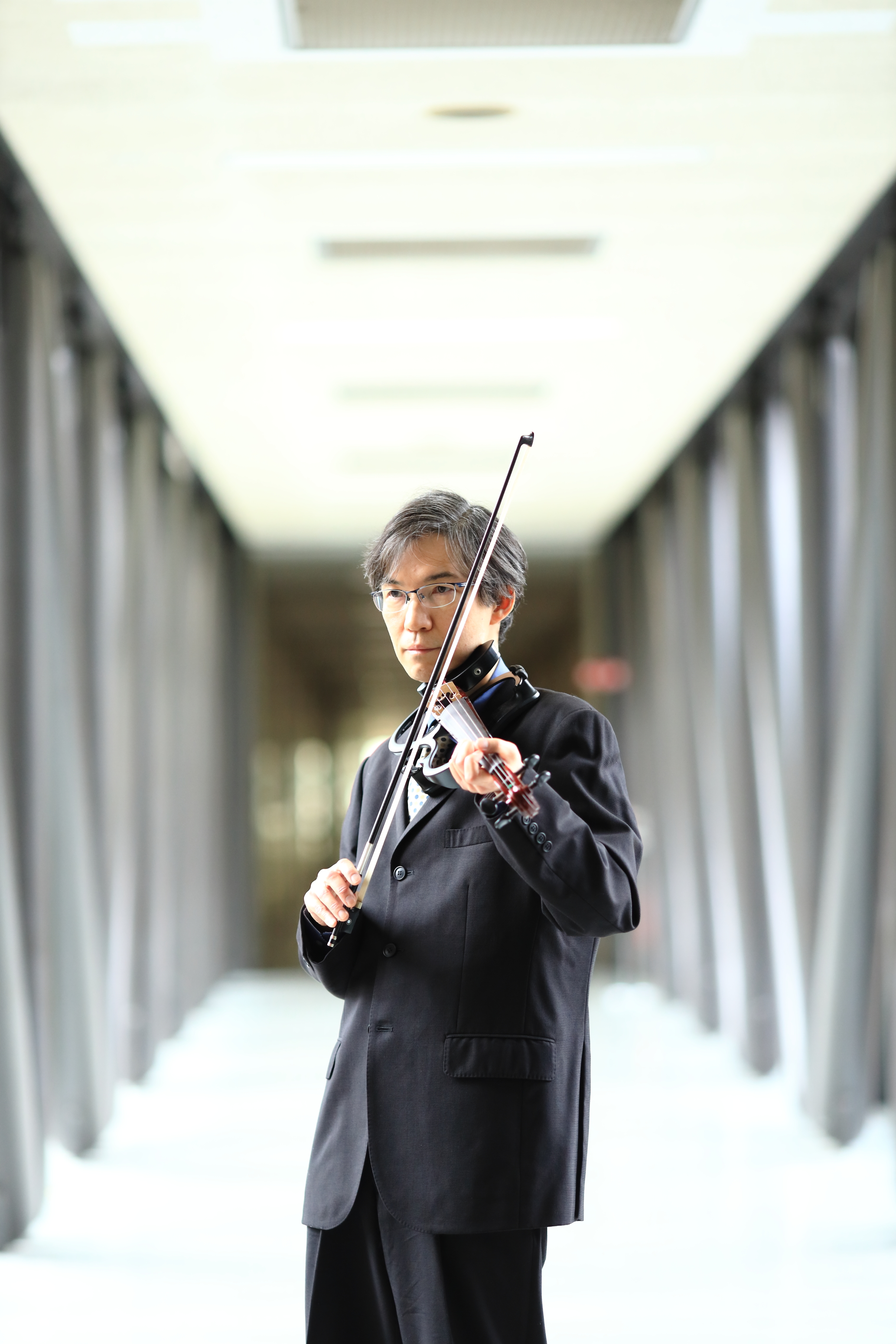
Speech is a highly specialized sensorimotor system that plays a central role in human communication. To better understand its unique properties, I compare speech with other sensorimotor systems, such as musical performance.
In experiments involving piano and violin performance, I manipulate auditory feedback and analyze how performers adapt their actions. Unlike musical performance, where visual feedback of hand movements is available, speech relies more heavily on auditory feedback.
Through such comparisons, I aim to clarify both the shared and distinct mechanisms of sensorimotor control across different domains.